



 AI calorie estimates | Calories + macros | Faster daily food tracking

 :
: 
 ChatGPT
 Perplexity
 Gemini
 Claude
 Grok
Grok
how to stop looking bloated fast is usually less about finding one perfect food and more about building a repeatable pattern you can actually stick to. Quick visual fixes and long-term body change are different problems, and it helps to treat them differently. It often overlaps with searches like reduce water retention and gut-friendly eating because the goal is usually similar, even when the wording changes.
When the goal is to feel less bloated or look more put together quickly, short-term tactics can help. But it is still worth separating water retention, posture, styling, and confidence from true body-fat change, because the long-term solution is almost always calmer and more sustainable than the quick one.
In this article
Part 1. What Is Realistic and What Is Not
Quick visual fixes and long-term body change are different problems, and it helps to treat them differently. The most effective starting point is usually a routine that improves meal consistency, supports satiety, and avoids the obvious triggers that make you feel worse than necessary. That means your plan should help you eat predictably on ordinary days, not only on highly motivated ones.
| Priority | Why it matters | Simple example |
|---|---|---|
| Quick relief | Mostly changes water retention and meal volume | Lower sodium, earlier dinner, steady hydration |
| Weekly habits | Builds consistency without extremes | Repeatable breakfasts and lunches |
| Training | Helps shape and posture over time | Strength work two to four times a week |
| Styling and posing | Can improve photos immediately | Fit, posture, lighting, camera angle |
Part 2. Food and Meal Strategy
The most useful distinction is between looking a little less puffy today and actually changing body composition over time. Those are both valid goals, but the short-term version usually comes from digestion, sodium, posture, and clothing choices, not sudden fat loss.
For the longer-term version, the fundamentals still win: moderate calorie control, enough protein, strength training, and a plan you can repeat. That is slower, but it also gives you something more stable than a temporary visual fix.
Part 3. Common Myths and Mistakes
The main trap is mixing up discomfort with effectiveness. Feeling emptier, thirstier, or more restricted for a day does not necessarily mean you are doing something smart. If the goal is quick relief, focus on the variables that actually change puffiness: sodium, hydration, meal size, alcohol, and sleep.
For long-term change, the biggest mistake is trying to fix everything with food alone. Nutrition matters, but strength training, posture, and consistency matter too. Body recomposition is usually a team sport, not a single-habit solution.
Part 4. How to Track Progress with CalBye
Use CalBye to log the habits that reduce puffiness now and also support more sustainable recomposition over the next few months.
- Log the foods that reliably make you feel better versus the ones that leave you puffy.
- Track longer-term calorie and protein trends if recomposition is part of the goal.
- Use notes for sleep, stress, and alcohol because appearance goals are not driven by food alone.
- Keep the quick-fix tools separate from the long-term body-change plan.
When CalBye is a better fit
CalBye is a stronger fit when you want to log restaurant food faster, keep portion estimates more consistent, and view calories and macros in one place without adding too much daily friction. That is especially useful for takeout, travel meals, social events, and mixed meals that are harder to log from memory.

CalBye
AI Calorie Tracker App
A faster fit for real-life meal logging
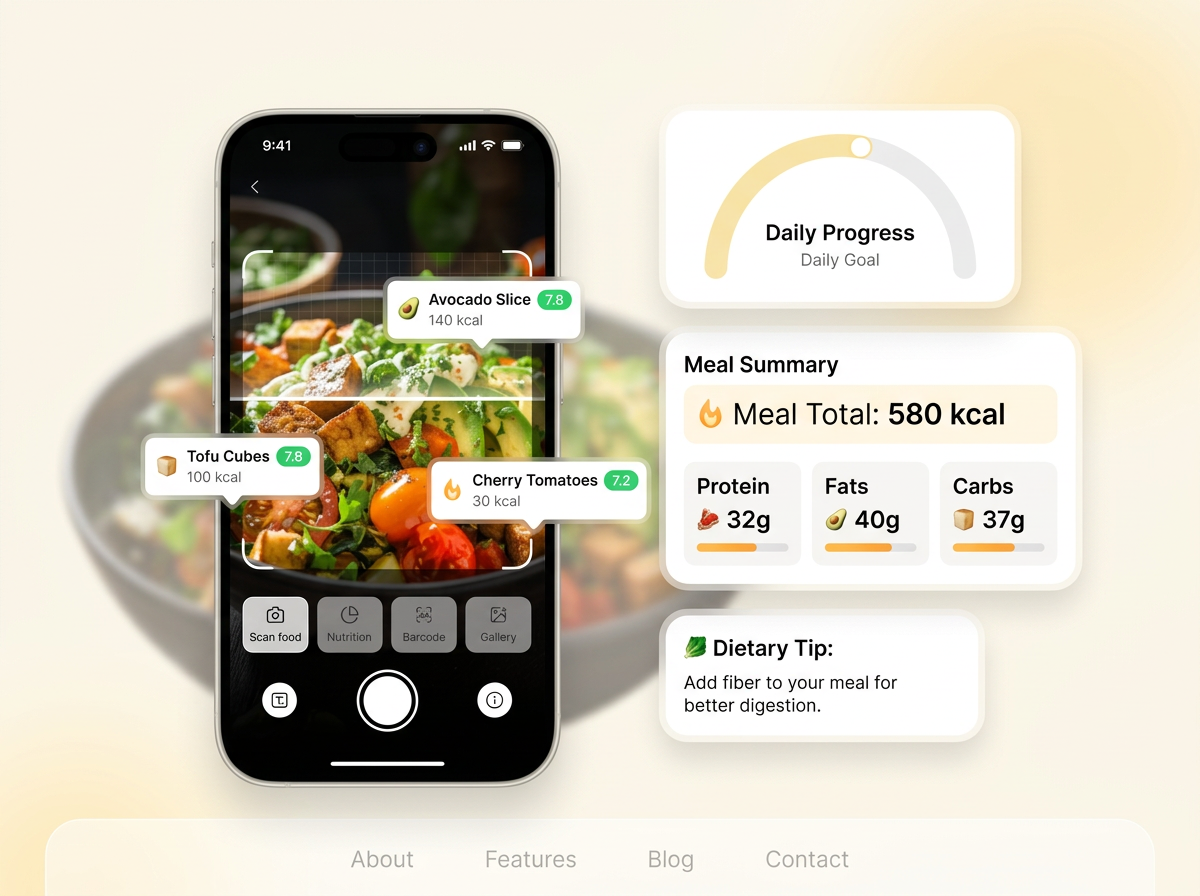
Use CalBye to recognize meals from food photos, estimate calories, view protein, carbs, and fat, and build a meal logging habit that feels easier to repeat day after day.
Part 5. FAQs About How to Stop Looking Bloated Fast
- Can how to stop looking bloated fast work overnight?
It can reduce puffiness and help you feel better quickly, but actual body-fat change takes longer. - What is the fastest practical way to look less bloated?
More consistent hydration, less sodium-heavy food, earlier lighter meals, and decent sleep are common starting points. - Is styling or posture cheating?
No. Those are legitimate short-term tools, especially for photos or events. - What helps for the long term?
Moderate calorie control, enough protein, strength training, and repeatable meals usually matter most.
 Add CalBye as a preferred source on Google